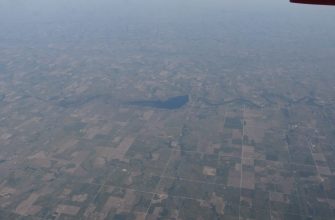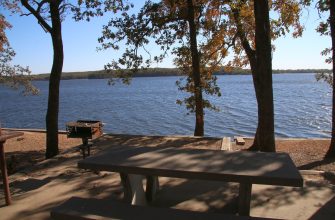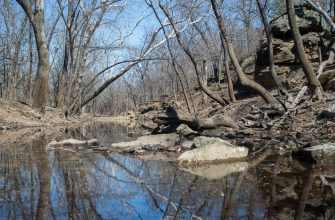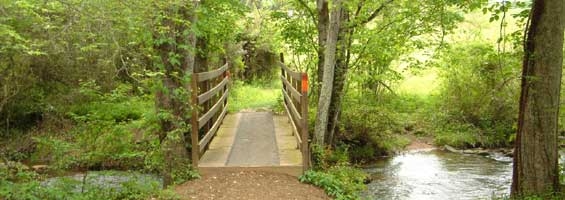
Elk City is the lake people come to for the land as much as the water. Tucked into the wooded Chautauqua Hills just northwest of Independence in southeast Kansas, this 4,500-acre reservoir is ringed by sandstone bluffs, boulder fields and one of the best hiking-trail networks in the state – including the rugged, 15-mile Elk River Trail, a National Recreation Trail that scrambles through “ice age” boulders and is regularly named one of the toughest, prettiest hikes in the Midwest. It’s also a quietly excellent crappie and saugeye fishery. For hikers, mountain bikers and anglers who like their scenery with some rock in it, Elk City is a southeast-Kansas gem.
This guide covers all of Elk City – the trails and the famous Table Mound boulders, the fishing, the state park and camping, and the historic town of Independence next door. It’s part of our growing Kansas Lakes Database.
- Elk City Lake at a glance
- Table Mound and the Chautauqua Hills
- The Elk River Trail, hiking and mountain biking
- Fishing Elk City Lake
- Is Elk City Lake safe to swim? Blue-green algae
- Elk City State Park and camping
- Getting there and what’s nearby
- Know before you go
- Frequently asked questions
- How long is the Elk River Trail?
- What is Table Mound at Elk City?
- What fish can you catch at Elk City Lake?
- Is there mountain biking at Elk City?
- Can you camp at Elk City Lake?
- Where is Elk City Lake?
Elk City Lake at a glance
- Size: ~4,500 acres with over 50 miles of shoreline, plus a 12,000-acre wildlife area
- Location: Montgomery County, about 5 miles northwest of Independence in the Chautauqua Hills
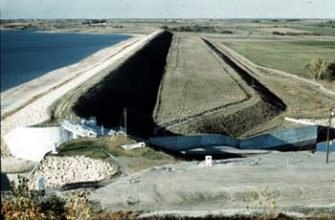
- Built: dam on the Elk River, completed in the 1960s by the U.S. Army Corps of Engineers
- Top fish: crappie, saugeye, white bass, largemouth bass, channel and flathead catfish, bluegill
- Trails: six hiking trails including the 15-mile Elk River Trail and the Table Mound Trail, plus the Eagle Rock mountain-bike trail
- Known for: rugged Chautauqua Hills scenery, boulder fields and premier hiking
Table Mound and the Chautauqua Hills
Drive into Elk City State Park and the prairie suddenly turns to rock. The lake sits in the Chautauqua Hills, a band of uplifted sandstone, shale and limestone, and the centerpiece is Table Mound – a flat-topped hill that rises about 250 feet above the surrounding farmland. Erosion and gravity have fractured its edges into “fields of boulders” that tumble down the hillsides, and the trails wind right through them. As one hiker put it, here the waves of grain give way to fields of stone. It’s the most un-Kansas landscape in eastern Kansas, and the reason the park is such a draw for hikers and photographers.
The Elk River Trail, hiking and mountain biking
Elk City is, first and foremost, a trail destination – six trails in all, two of them National Recreation Trails:
- Elk River Hiking Trail – about 15 miles point-to-point from the west edge of the dam to the U.S. 160 bridge, a genuinely rugged route over bluffs and through boulder scrambles that backpackers rank among the best in the region.
- Table Mound Hiking Trail – about 2¾ miles along the reservoir’s bluffs through ash and oak.
- Eagle Rock Mountain Bike Trail – a ~4-mile loop built for beginners but fun for experts, with dips, climbs and a ride through the boulder fields.
- Plus the Post Oak, Green Thumb, Timber Ridge and paved South Squaw nature trails for easier walks.
It adds up to more than 15 miles of trail, from accessible nature walks to boulder-scrambling treks – more, and more dramatic, than almost any lake in Kansas.
Fishing Elk City Lake
Don’t let the scenery distract you – Elk City fishes well. Crappie is the standout, with spring spawners stacking in the coves and feeder streams, and the lake also gives up saugeye, white bass, largemouth bass, and strong channel and flathead catfish, plus bluegill. Bank and pier fishing are productive, and there’s a kids’ fishing pond in the park.
- Crappie: fish the coves and timber in spring as the fish spawn; move to deeper structure in summer.
- Saugeye & white bass: work the points and dam at low light, and chase white-bass schools in open water.
- Catfish: the flats and upper river arm produce channels and big flatheads.
Anglers 16 to 74 need a Kansas fishing license; check the latest KDWP fishing report and limits before you go.
Is Elk City Lake safe to swim? Blue-green algae
Elk City has a swim beach and is a pleasant summer lake, but like other fertile Kansas reservoirs it can develop blue-green algae (cyanobacteria) blooms in warm weather. KDHE posts Watch and Warning advisories; during a Watch, boating and fishing are fine but avoid swimming near visible scum, and during a Warning keep children and dogs out of the water. Check the current KDHE advisory before you swim.
Elk City State Park and camping
Elk City State Park covers about 857 acres along the east shore and is loaded for its size: 95 modern campsites with electric and water (some with sewer), modern showers, a swim beach, fishing piers and an accessible fishing dock, a kids’ fishing pond, a disc golf course, an 18-hole par-3 golf course, archery and an exercise trail, plus a three-lane boat ramp. The surrounding 12,000-acre wildlife area is open to hunting in season. Reserve sites through the Kansas State Parks system and remember the state-park vehicle permit.
Getting there and what’s nearby
Elk City sits about five miles northwest of Independence in southeast Kansas, an easy drive from Coffeyville or the Tulsa, Oklahoma area. Independence is a fun base: it has the Little House on the Prairie site (Laura Ingalls Wilder’s childhood cabin), Riverside Park with its free zoo and vintage Ralph Mitchell carousel, and the big Neewollah festival each fall. Pair the lake’s trails with a day in town and you’ve got a great southeast-Kansas weekend.
Know before you go
- State park permit: a Kansas state-park vehicle permit is required for Elk City State Park (daily or annual).
- Fishing license: anglers 16-74 need a Kansas fishing license.
- Trails: the Elk River Trail is rugged and remote in spots – carry water, wear real shoes, and tell someone your plan if you’re hiking the full 15 miles.
- Algae: check the current KDHE blue-green algae advisory before swimming, and avoid visible scum.
- Water level: as a flood-control reservoir Elk City rises and falls – check current conditions before launching.
Frequently asked questions
How long is the Elk River Trail?
About 15 miles point-to-point, from the west edge of the Elk City dam to the U.S. 160 bridge. It’s a rugged National Recreation Trail over bluffs and through boulder fields, considered one of the best backpacking hikes in the region.
What is Table Mound at Elk City?
A flat-topped hill that rises about 250 feet above the farmland, the centerpiece of Elk City State Park. Erosion has fractured its edges into “fields of boulders,” and trails wind through them.
What fish can you catch at Elk City Lake?
Crappie is the standout, especially in spring, along with saugeye, white bass, largemouth bass, channel and flathead catfish and bluegill.
Is there mountain biking at Elk City?
Yes – the Eagle Rock Mountain Bike Trail is about a 4-mile loop built for beginners but fun for experienced riders, winding through woods and the park’s boulder fields.
Can you camp at Elk City Lake?
Yes – Elk City State Park has 95 modern campsites with electric and water (some with sewer), a swim beach, disc golf, an 18-hole par-3 golf course and a boat ramp.
Where is Elk City Lake?
In Montgomery County in southeast Kansas, about five miles northwest of Independence in the Chautauqua Hills.
Related: explore more of the largest lakes in Kansas – including John Redmond Reservoir, Council Grove Lake and El Dorado Lake – or head back to the Kansas Lakes Database.