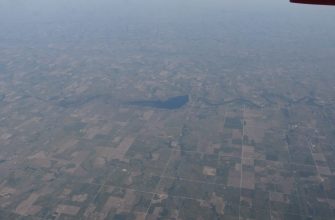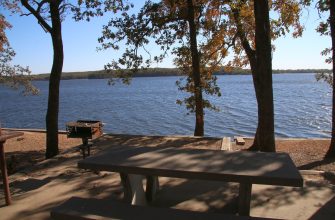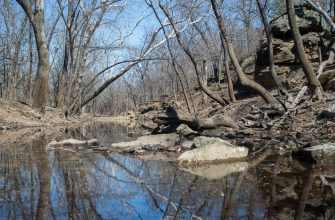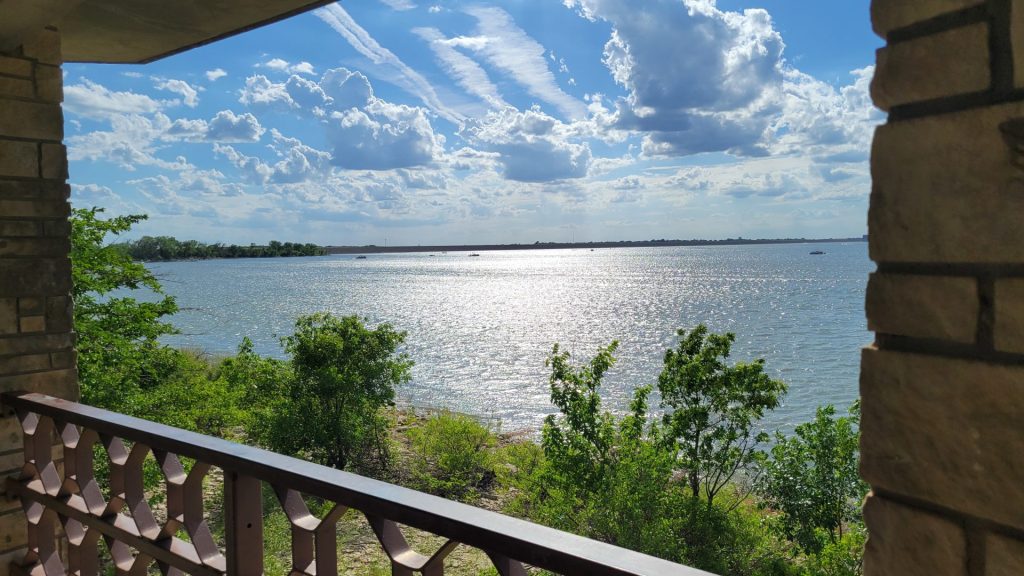
El Dorado is the lake that does everything at scale. Set on the western edge of the Flint Hills just half an hour from Wichita, its 8,000 acres of water are wrapped by the largest state park in Kansas – some 4,000 acres of park with 1,100 campsites, two swim beaches, a marina, a sailing club and seven trails. If you’ve ever wanted a lake weekend where you don’t have to fight for a campsite or a boat ramp, this is the one. It’s also a genuinely good fishery, with walleye, wiper and white bass that draw anglers from across south-central Kansas.
This guide covers all of El Dorado – the fishing, the enormous state park and its four areas, the marina and sailing, the Flint Hills trails, and the after-dark Lantern Festival that lights up the river below the dam. It’s part of our growing Kansas Lakes Database.
- El Dorado Lake at a glance
- The largest state park in Kansas
- Fishing El Dorado Lake
- Is El Dorado Lake safe to swim? Blue-green algae
- Boating, the marina and sailing
- Camping and the four areas
- Trails and the Flint Hills
- The El Dorado Lantern Festival
- Getting there and what’s nearby
- Know before you go
- Frequently asked questions
- How big is El Dorado Lake?
- Is El Dorado State Park the largest in Kansas?
- What fish can you catch at El Dorado Lake?
- Can you camp at El Dorado Lake?
- Is there a marina at El Dorado Lake?
- Is El Dorado Lake safe to swim in?
- Where is El Dorado Lake?
El Dorado Lake at a glance
- Size: ~8,000 acres (up to ~10,700 at flood pool); about 98 miles of shoreline
- Maximum depth: about 60 feet; normal pool elevation around 1,339 feet
- Location: Butler County, just northeast of El Dorado; about 30 minutes from Wichita off the Kansas Turnpike
- Built: dam on the Walnut River, completed in 1981 by the U.S. Army Corps of Engineers
- Top fish: walleye, wiper, white bass, crappie, channel and flathead catfish, largemouth and smallmouth bass, plus stocked rainbow trout
- Famous for: El Dorado State Park – the largest state park in Kansas
The largest state park in Kansas
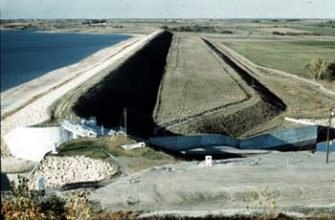
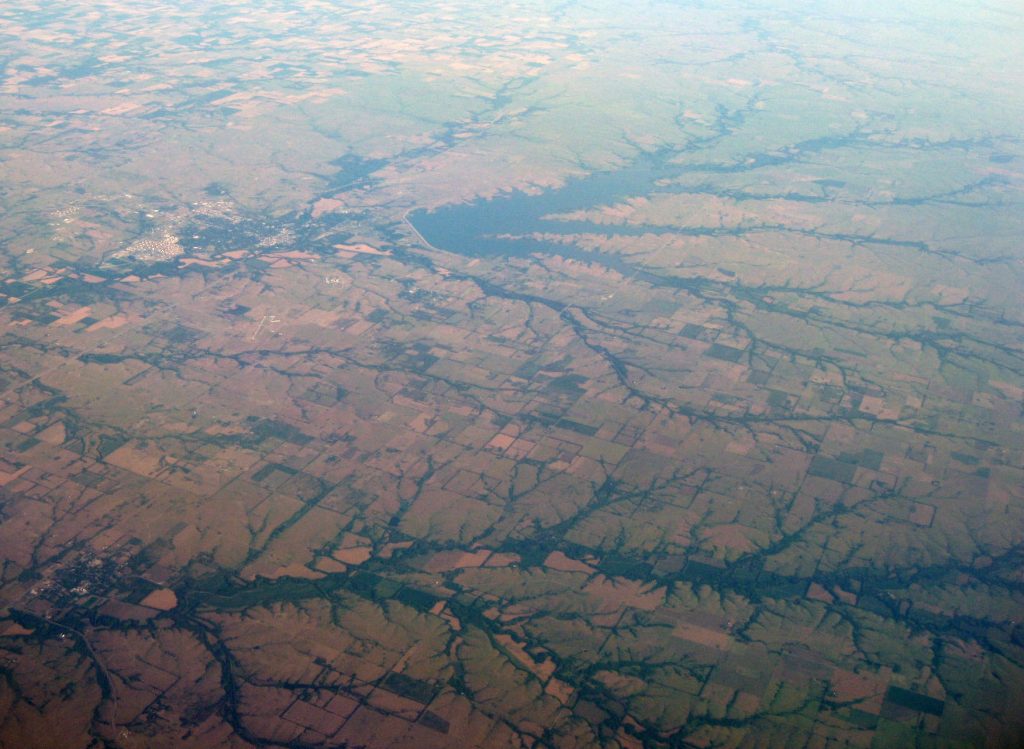
El Dorado’s headline is its park. The Corps of Engineers dammed the Walnut River and filled the reservoir in 1981 – swallowing two older lakes in the process – and the state built out a park to match: roughly 4,000 acres split into four areas – Bluestem Point, Boulder Bluff, Shady Creek and Walnut River – each with its own campgrounds, boat ramps and trails. With around 1,100 campsites, El Dorado State Park is the biggest in the Kansas system, and it consistently lands on “best state park” lists for fishing and family camping.
Fishing El Dorado Lake
El Dorado is a deep, productive reservoir with a long species list. Walleye is a marquee target – the bite along the face of the dam and over the old railroad bed is well known – and the lake gives up plenty of wiper, white bass, crappie, and channel and flathead catfish, with largemouth, smallmouth and spotted bass in the mix and rainbow trout stocked in the cooler months.
- Walleye: fish the dam face and the submerged old railroad bed, and the points at low light.
- Wiper & white bass: chase surface-feeding schools in open water on summer mornings and evenings.
- Crappie: work brush, timber and rock; spring is prime in the coves.
- Catfish: the flats and upper arms produce channels and big flatheads.
One housekeeping note: El Dorado has zebra mussels, so clean, drain and dry your boat and gear before moving to another lake. Anglers 16 to 74 need a Kansas fishing license; check the latest KDWP fishing report and limits first.
Is El Dorado Lake safe to swim? Blue-green algae
El Dorado has two designated swim beaches and is a popular summer swimming lake, but like every fertile Kansas reservoir it can develop blue-green algae (cyanobacteria) blooms in warm weather. KDHE posts Watch and Warning advisories; during a Watch, boating and fishing are fine but avoid swimming near visible scum, and during a Warning keep children and dogs out of the water. Check the current KDHE advisory before you swim.
Boating, the marina and sailing
With this much open water and easy access, El Dorado is a boating, water-skiing and jet-skiing favorite. Shady Creek Marina handles rentals and supplies, six boat ramps with courtesy docks keep launches moving, and the Walnut Valley Sailing Club races on the lake through the season. It’s a big, friendly lake for everything from a fishing kayak to a ski boat.
Camping and the four areas
Camping is the whole point at El Dorado. Across its four areas you’ll find everything from primitive tent sites to full-utility RV hookups, seven cabins, two swim beaches, a 24-site group campground, ten group shelters, a designated horse campground, and a large amphitheater. Reserve sites and cabins through the Kansas State Parks system, book early for summer weekends, and remember the state-park vehicle permit.
Trails and the Flint Hills
El Dorado sits right where the tallgrass prairie of the Flint Hills meets the lake, and the park’s seven trails – for hikers, bikers and horseback riders – range from a half-mile stroll to a 12-mile trek. The Teter Nature Trail and the Ada Trail wander through prairie and the Walnut River bottoms, with big Flint Hills views and good birding. In spring and early summer the prairie greens up and the wildflowers come on – it’s one of the prettier lake settings in the region.
The El Dorado Lantern Festival
One of the lake’s signature events is the Lantern Festival, held below the dam by the Walnut River amphitheater. As night falls, the sky fills with floating lanterns, and the evening rounds out with live music, dancing, food vendors and activities for kids. It’s become a beloved annual tradition and a reason to plan a lake weekend around a date on the calendar.
Getting there and what’s nearby
El Dorado is one of the easiest big lakes to reach in the state – it sits just off the Kansas Turnpike (I-35), about 30 minutes northeast of Wichita and minutes from the town of El Dorado. While you’re in town, the Kansas Oil Museum tells the story of the El Dorado oil boom, and the Flint Hills roll out east toward the Tallgrass Prairie National Preserve.
Know before you go
- State park permit: a Kansas state-park vehicle permit is required for El Dorado State Park (daily or annual).
- Fishing license: anglers 16-74 need a Kansas fishing license.
- Zebra mussels: El Dorado is infested – clean, drain and dry your boat and gear before launching elsewhere.
- Algae: check the current KDHE blue-green algae advisory before swimming, and avoid visible scum.
- Water level: as a flood-control reservoir El Dorado rises and falls – check current conditions before launching.
Frequently asked questions
How big is El Dorado Lake?
About 8,000 acres with roughly 98 miles of shoreline, in Butler County near the town of El Dorado, about 30 minutes from Wichita. It reaches around 60 feet deep.
Is El Dorado State Park the largest in Kansas?
Yes – at about 4,000 acres with around 1,100 campsites across four areas, El Dorado State Park is the largest state park in Kansas.
What fish can you catch at El Dorado Lake?
Walleye (best along the dam face and old railroad bed), wiper, white bass, crappie, channel and flathead catfish, largemouth, smallmouth and spotted bass, and stocked rainbow trout in cooler months.
Can you camp at El Dorado Lake?
Yes – extensively. El Dorado State Park has about 1,100 campsites across the Bluestem Point, Boulder Bluff, Shady Creek and Walnut River areas, plus seven cabins, a horse campground and two swim beaches.
Is there a marina at El Dorado Lake?
Yes – Shady Creek Marina offers rentals and supplies, there are six boat ramps with courtesy docks, and the Walnut Valley Sailing Club races on the lake.
Is El Dorado Lake safe to swim in?
Usually – it has two swim beaches – but check the current KDHE blue-green algae advisory first, avoid visible scum, and keep kids and dogs out during a Warning.
Where is El Dorado Lake?
In Butler County in south-central Kansas, just northeast of the town of El Dorado and about 30 minutes from Wichita off the Kansas Turnpike (I-35).
Related: explore more of the largest lakes in Kansas – including Cheney Lake, Wilson Lake and Milford Lake – or head back to the Kansas Lakes Database.