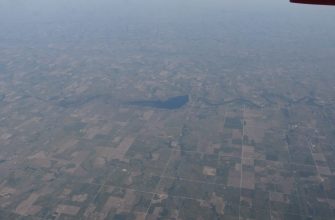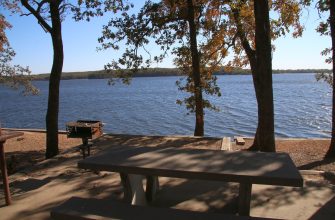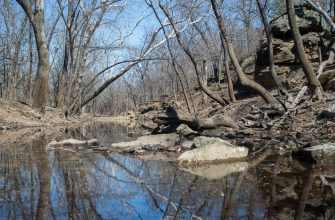
John Redmond is the shallow one – and that turns out to be its charm. Spread across 9,400 acres of the Neosho River valley near Burlington in east-central Kansas, it averages only a few feet deep and tops out around 12 feet, which makes it the shallowest of the state’s big reservoirs. All that shallow, timber-filled water grows crappie and catfish, and the marshy upper end is wild enough to be a National Wildlife Refuge – one of the best birding spots in Kansas. For anglers and bird-watchers who like their lakes quiet and a little wild, John Redmond delivers.
This guide covers all of John Redmond – the flooded-timber fishing, the Flint Hills National Wildlife Refuge, the Corps campgrounds, and the unusual story of a lake that fills with silt and helps cool a nuclear plant. It’s part of our growing Kansas Lakes Database.
- John Redmond Reservoir at a glance
- The shallowest big lake in Kansas
- Fishing John Redmond Reservoir
- Is John Redmond safe to swim? Blue-green algae
- The Flint Hills National Wildlife Refuge
- Wolf Creek and Coffey County Lake
- Boating and camping
- Getting there and what’s nearby
- Know before you go
- Frequently asked questions
- How deep is John Redmond Reservoir?
- What fish can you catch at John Redmond?
- What is the Flint Hills National Wildlife Refuge?
- Can you camp at John Redmond Reservoir?
- Is John Redmond near the Wolf Creek nuclear plant?
- Where is John Redmond Reservoir?
John Redmond Reservoir at a glance
- Size: ~9,400 acres with about 59 miles of shoreline, in the Neosho River valley
- Maximum depth: about 12 feet – the shallowest of Kansas’ big reservoirs; pool elevation around 1,041 feet
- Location: Coffey County, near Burlington and New Strawn; about 30 miles south of Emporia
- Built: dam on the Neosho River, completed in 1964 by the U.S. Army Corps of Engineers
- Top fish: white crappie, white bass, walleye, channel and flathead catfish
- Known for: flooded-timber crappie fishing and the adjacent Flint Hills National Wildlife Refuge
The shallowest big lake in Kansas
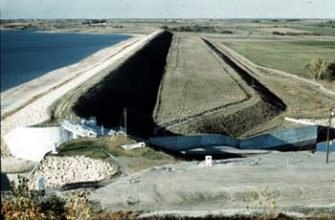
The Corps of Engineers dammed the Neosho River here in 1964, and because the valley is broad and flat, the reservoir came out wide and shallow. That has two consequences. The good one: lots of flooded timber and shallow, fertile water, which is exactly what crappie and catfish love. The challenging one: John Redmond catches the Neosho’s heavy silt load, and it has lost a large share of its original capacity to sediment over the decades – enough that the state has run major dredging projects to keep it viable, in part because the lake supplies cooling water to the nearby Wolf Creek nuclear plant. It’s a working lake with a real job, and the fishing is the happy byproduct.
Fishing John Redmond Reservoir
Shallow water and standing timber make John Redmond a crappie lake first – the flooded timber is ideal habitat, and the lake has a reputation for good numbers of slabs – backed by strong white bass, walleye, and excellent channel and flathead catfish. Bank fishing is popular and productive here, which isn’t true of every reservoir.
- Crappie: fish the standing timber, brush and creek arms – spring is prime, but the timber holds fish much of the year.
- White bass & walleye: chase white-bass schools in open water in summer, and work the dam and channel for walleye at low light.
- Catfish: the flats, the river arm and the timber produce channels and big flatheads – a bank angler’s lake.
One housekeeping note: John Redmond has zebra mussels, so clean, drain and dry your boat and gear before moving on. Anglers 16 to 74 need a Kansas fishing license; check the latest KDWP fishing report and limits before you go.
Is John Redmond safe to swim? Blue-green algae
Because it’s shallow, warm and nutrient-rich, John Redmond is prone to blue-green algae (cyanobacteria) blooms in summer, and it appears on the KDHE advisory list in some years. KDHE posts Watch and Warning advisories; during a Watch, boating and fishing are fine but avoid swimming near visible scum, and during a Warning keep children and dogs out of the water. Check the current KDHE advisory before any water contact.
The Flint Hills National Wildlife Refuge
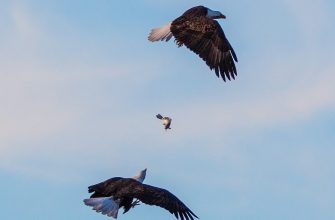
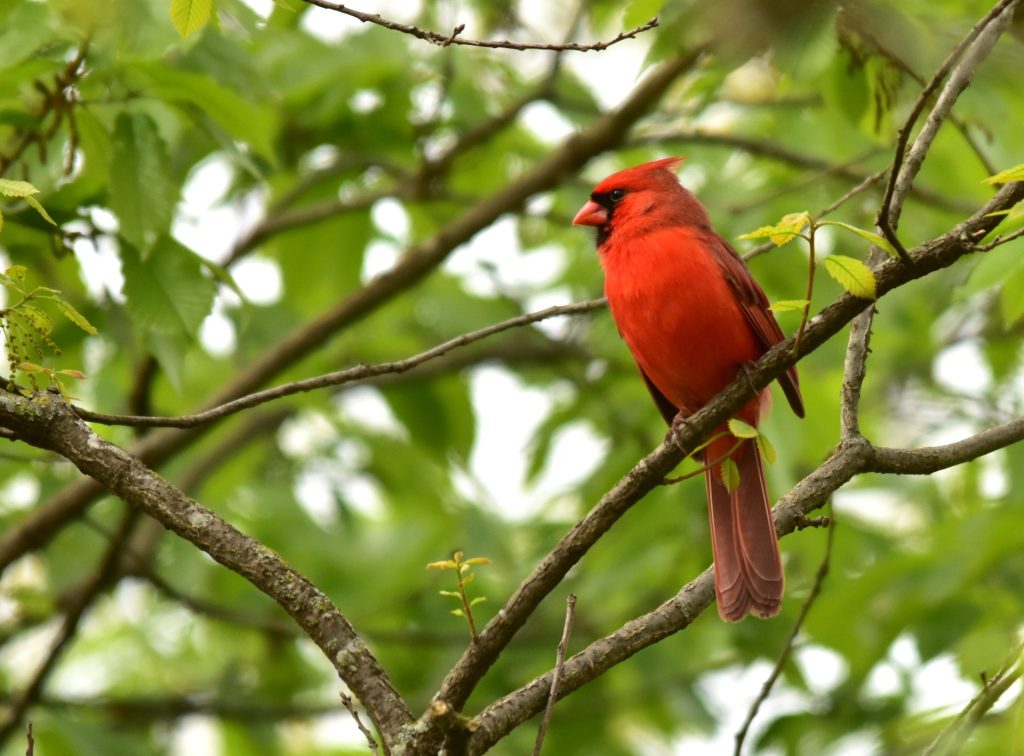
This is what makes John Redmond special. The marshy upper end of the reservoir, along the broad Neosho River valley, is the Flint Hills National Wildlife Refuge – established in 1966 and one of the premier birding destinations in Kansas. More than 294 species of birds have been recorded here, and the refuge is a major stopover for waterfowl and shorebirds on migration; spring (April-May) is prime for songbirds. There’s a bird-watching blind near the East Camping area, and the refuge offers wildlife drives, trails and seasonal hunting. For birders, it’s reason enough to make the trip.
Wolf Creek and Coffey County Lake
A few miles east, the Wolf Creek Generating Station – Kansas’ only nuclear power plant – draws cooling water tied to John Redmond, and its dedicated cooling lake, Coffey County Lake (about 5,500 acres), is a separate water altogether. Warmed by the plant, Coffey County Lake has its own reputation for fast-growing fish and a long fishing season, and it’s worth knowing it’s a different lake than John Redmond if you’re planning a trip.
Boating and camping
The Corps of Engineers runs several parks around John Redmond – the Dam Site and Riverside West campgrounds, the Otter Creek recreation area, and the Strawn and Hartford areas – with RV and tent camping, boat ramps and an off-road-vehicle area. Services at the lake are fairly basic, so bring what you need; bank fishing and quiet camping are the draw, not frills. Reserve Corps sites on Recreation.gov.
Getting there and what’s nearby
John Redmond sits just off U.S. 75 near Burlington, the Coffey County seat, about 30 minutes south of Emporia and roughly midway between Wichita and the Kansas City area. It’s quiet, rural east-central Kansas – good for a low-key fishing-and-birding weekend well off the interstate.
Know before you go
- Fishing license: anglers 16-74 need a Kansas fishing license.
- Zebra mussels: John Redmond is infested – clean, drain and dry your boat before launching elsewhere.
- Algae: shallow and bloom-prone – check the current KDHE advisory before swimming.
- Refuge rules: the Flint Hills National Wildlife Refuge has its own regulations and seasonal closures for wildlife – check before you visit.
- Water level: as a flood-control reservoir John Redmond rises and falls – check current conditions before launching.
Frequently asked questions
How deep is John Redmond Reservoir?
Very shallow – about 12 feet at its deepest, making it the shallowest of Kansas’ big reservoirs. Its wide, timber-filled shallows are ideal crappie and catfish habitat.
What fish can you catch at John Redmond?
White crappie is the headliner thanks to the flooded timber, along with white bass, walleye, and channel and flathead catfish. Bank fishing is popular and productive.
What is the Flint Hills National Wildlife Refuge?
A national wildlife refuge at the upper end of John Redmond, established in 1966, where more than 294 bird species have been recorded – one of the best birding and waterfowl-watching spots in Kansas, with a bird-watching blind and wildlife drives.
Can you camp at John Redmond Reservoir?
Yes – the Corps of Engineers runs several parks including the Dam Site and Riverside West campgrounds, Otter Creek, Strawn and Hartford, with boat ramps and an ORV area, bookable on Recreation.gov.
Is John Redmond near the Wolf Creek nuclear plant?
Yes – John Redmond supplies cooling water tied to the Wolf Creek Generating Station a few miles east. The plant’s dedicated cooling lake, Coffey County Lake, is a separate, warm-water fishing lake.
Where is John Redmond Reservoir?
In Coffey County in east-central Kansas, near Burlington and New Strawn off U.S. 75, about 30 minutes south of Emporia.
Related: explore more of the largest lakes in Kansas – including Council Grove Lake upstream on the Neosho, plus Marion Reservoir and El Dorado Lake – or head back to the Kansas Lakes Database.