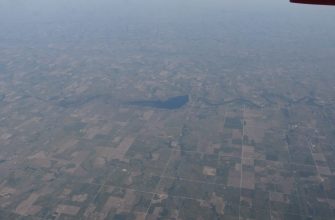
Clinton is Lawrence’s lake, and it wears that role well. Sitting barely four miles west of downtown and the University of Kansas, it’s the closest big water to one of the state’s liveliest college towns – and unlike a lot of Kansas reservoirs, it runs clear. That clarity is the key to everything here: it makes Clinton a smallmouth-bass and walleye lake, the best sailing water in the region, and a place people actually swim. At about 7,000 acres with roughly 85 miles of shoreline, it punches well above its size, packing in the state’s largest marina and one of its best trail systems.
This guide covers all of it – the clear-water fishing, the North Shore mountain-bike trails, the campgrounds, the eagles, and the drowned Wakarusa Valley towns that the lake quietly covered fifty years ago. It’s part of our growing Kansas Lakes Database.
- Clinton Lake at a glance
- The lake over the Wakarusa Valley
- Fishing Clinton Lake
- Is Clinton Lake safe to swim? Blue-green algae
- Boating, the marina and sailing
- Camping at Clinton Lake
- The North Shore Trails: mountain biking & hiking
- Eagles and wildlife
- Getting there and what’s nearby
- Know before you go
- Frequently asked questions
- How big is Clinton Lake?
- What fish can you catch at Clinton Lake?
- Is there mountain biking at Clinton Lake?
- Is there a marina at Clinton Lake?
- Can you camp at Clinton Lake?
- Is Clinton Lake safe to swim in?
- Where is Clinton Lake?
Clinton Lake at a glance
- Size: ~7,000 acres, known for unusually clear water
- Shoreline: about 85 miles
- Maximum depth: about 55 feet near the dam (shallow over much of the lake)
- Location: Douglas County, ~4 miles west of Lawrence; ~30 minutes from Topeka and under an hour from the Kansas City metro
- Built: dam on the Wakarusa River, completed in the late 1970s (U.S. Army Corps of Engineers)
- Top fish: smallmouth and largemouth bass, walleye, crappie, white bass, channel and blue catfish (plus a stocked trout pond)
- Known for: clear water, the largest full-service marina in Kansas, and the North Shore mountain-bike trails
The lake over the Wakarusa Valley
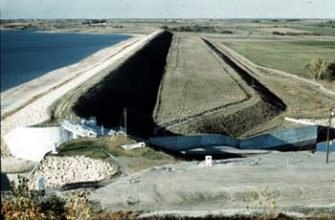
Clinton is younger than most Kansas reservoirs – the Corps of Engineers dammed the Wakarusa River in the 1970s, and the conservation pool filled around 1980. As the water rose it covered a quiet farming valley and the little communities in it, including Bloomington, Richland and Belvoir. That history hasn’t been forgotten: the Clinton Lake Museum, run by the Clinton Lake Historical Society in the Bloomington Park area, keeps the story of the Wakarusa Valley and its drowned towns alive. The lake also does serious daily work, supplying drinking water to well over a hundred thousand people in northeast Kansas.
Fishing Clinton Lake
Clear water changes what a Kansas lake can grow, and Clinton is the proof. It’s one of the better smallmouth bass lakes in the state – smallmouth need the clean, rocky habitat that muddy reservoirs can’t offer – and it fishes well for walleye, crappie, white bass, largemouth bass, and channel and blue catfish. There’s even a stocked trout pond and a kids’ fishing pond in the state park, the trout going in for the cooler months.
- Smallmouth & largemouth bass: fish the rocky points, riprap and clear-water structure – Clinton’s clarity means lighter line and a stealthier approach pay off.
- Walleye: work the points and the river channel; clear water often means an early-morning and evening bite.
- Crappie & white bass: find crappie on brush and timber in the coves, and chase white-bass schools in open water in summer.
- Catfish: the upper, shallower arms produce channels and blues, especially after dark.
Anglers 16 to 74 need a Kansas fishing license; check the latest KDWP fishing report and current limits before you go.
Is Clinton Lake safe to swim? Blue-green algae
Clinton’s clear water makes it a popular swimming and beach lake, but like every fertile Kansas reservoir it can develop blue-green algae (cyanobacteria) blooms in summer – the Corps and KDHE have flagged areas near the outlet tower and the marina in recent years. KDHE posts Watch and Warning advisories; during a Watch, boating and fishing are fine but you should avoid swimming near any visible scum, and during a Warning keep children and dogs out of the water. Check the current KDHE advisory before you swim.
Boating, the marina and sailing
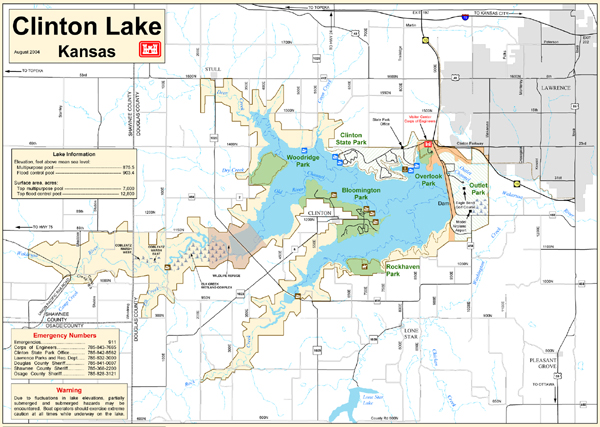
Clinton Lake Marina, in the state park on the north shore, is the largest full-service marina in Kansas – slips, boat and pontoon rentals, fuel, a store and a restaurant, the works. The clear, breezy water has made Clinton the sailing hub of the region, home to an active sailing club, and there’s room for ski boats, wakeboarders and jet skis too. Public boat ramps are spread around the state park and the Corps parks; watch the water level, which moves with the season.
Camping at Clinton Lake
Clinton State Park spreads across about 1,425 acres on the north shore, four miles from Lawrence, with campgrounds ranging from full-hookup RV sites to walk-in tent spots, plus cabins, a swim beach and a busy day-use area. Across the lake, the Corps of Engineers runs its own parks – including Bloomington, the equestrian-friendly Rockhaven, and primitive Woodridge – bookable on Recreation.gov. All told there are several campgrounds and hundreds of sites to choose from.
The North Shore Trails: mountain biking & hiking
If you ride, this is the headline. The Clinton North Shore Trails are some of the best mountain biking in Kansas – a stacked-loop system of flowing, technical singletrack maintained by the Lawrence Mountain Bike Club, color-coded by difficulty (the blue loop is the gentle introduction, the white loop is the technical test). In all, Clinton offers 50-plus miles of hiking, equestrian and mountain-bike trails, including the Prairieview nature trail, plus three disc-golf courses. It’s the kind of place where a fishing family and a crew of mountain bikers can share the same parking lot and both leave happy.
Eagles and wildlife
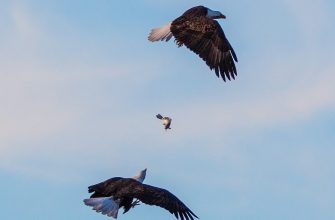
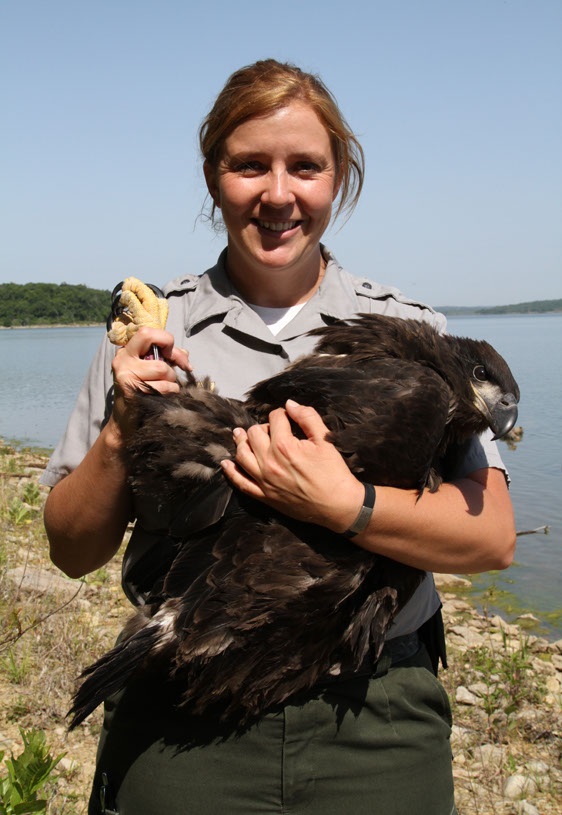
Bald eagles winter along Clinton’s open water and nest in the surrounding timber – the lake has become one of the more reliable eagle spots near Lawrence, and the Corps and KDWP run wildlife programs through the cold months. The wildlife area and woods are good for birding, deer and turkey the rest of the year, with hunting allowed on Corps land in season under KDWP regulations.
Getting there and what’s nearby
Clinton is about 10 minutes from downtown Lawrence and the University of Kansas, 30 minutes from Topeka, and under an hour from the Kansas City metro and Olathe – one of the easiest big lakes to reach in the state. Pair it with a day in Lawrence: Massachusetts Street’s shops and restaurants, KU’s campus and the Booth Family Hall of Athletics, and the Haskell Indian Nations University grounds are all close by.
Know before you go
- State park permit: a Kansas state-park vehicle permit is required for Clinton State Park (daily or annual).
- Fishing license: anglers 16-74 need a Kansas fishing license.
- Algae: check the current KDHE blue-green algae advisory before swimming, and avoid visible scum.
- Trails: the North Shore singletrack can be closed when wet to protect the trail – check trail status before you ride.
- Water level: Clinton is a flood-control reservoir and rises and falls – check current lake data before launching.
Frequently asked questions
How big is Clinton Lake?
About 7,000 acres with roughly 85 miles of shoreline, in Douglas County just west of Lawrence. It’s known for unusually clear water and reaches about 55 feet deep near the dam.
What fish can you catch at Clinton Lake?
Clinton’s clear water makes it one of the better smallmouth-bass lakes in Kansas, along with largemouth bass, walleye, crappie, white bass, and channel and blue catfish. The state park also has a stocked trout pond and a kids’ fishing pond.
Is there mountain biking at Clinton Lake?
Yes – the Clinton North Shore Trails are among the best mountain-biking singletrack in Kansas, color-coded by difficulty and maintained by the Lawrence Mountain Bike Club, part of 50-plus miles of trails around the lake.
Is there a marina at Clinton Lake?
Yes – Clinton Lake Marina in the state park is the largest full-service marina in Kansas, with slips, boat and pontoon rentals, fuel, a store and a restaurant. Clinton is also the region’s top sailing lake.
Can you camp at Clinton Lake?
Yes. Clinton State Park on the north shore has RV and tent sites, cabins and a swim beach, and the Army Corps of Engineers runs additional parks – Bloomington, Rockhaven and Woodridge – bookable on Recreation.gov.
Is Clinton Lake safe to swim in?
Usually – the clear water makes it a popular swimming lake – but check the current KDHE blue-green algae advisory first, as areas near the tower and marina have been flagged in recent summers. Avoid visible scum and keep dogs out of it.
Where is Clinton Lake?
In Douglas County, northeast Kansas, about four miles west of Lawrence and the University of Kansas – roughly 30 minutes from Topeka and under an hour from Kansas City.
Related: explore more of the largest lakes in Kansas – including Perry Lake, Tuttle Creek Lake and Milford Lake – or head back to the Kansas Lakes Database.