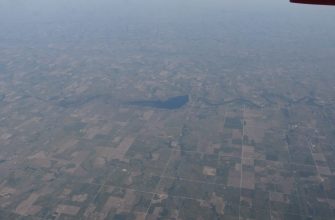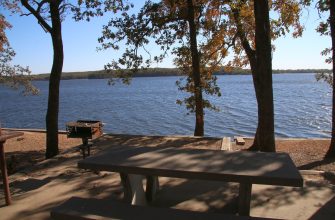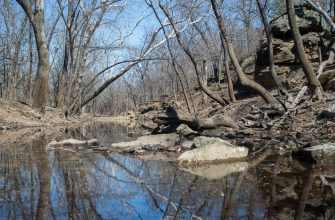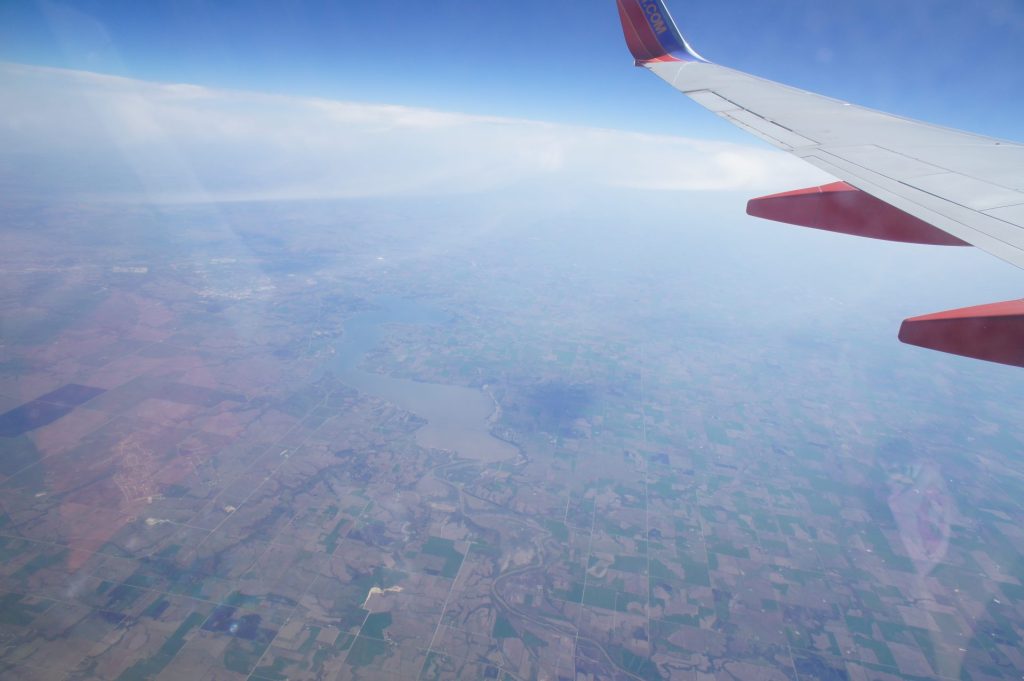
Locals call Perry “Paradise on the Plains,” and the nickname makes more sense the moment you see it: a big, timbered reservoir folded into the wooded hills of Jefferson County, close enough to Topeka, Lawrence and Kansas City that half of northeast Kansas treats it as the backyard lake. At about 11,150 acres with more than 160 miles of shoreline, Perry is one of the larger lakes in the state – and one of the few that’s as well known for its trails as its fishing.
Anglers come for some of the best crappie and bass water in Kansas. Hikers and mountain bikers come for a rugged, nationally recognized trail system you won’t find at most reservoirs. This guide covers all of it, from the Rock Creek and Slough Creek campgrounds to the eagles that winter below the dam. It’s part of our growing Kansas Lakes Database.
- Perry Lake at a glance
- A backyard lake with a sunken town
- Fishing Perry Lake
- Is Perry Lake safe to swim? Blue-green algae
- Boating, the marina and sailing
- Camping at Perry Lake
- The Perry Lake Trail, mountain biking & trails
- Eagles and wildlife
- Getting there and what’s nearby
- Know before you go
- Frequently asked questions
- How big is Perry Lake?
- What fish can you catch at Perry Lake?
- How long is the Perry Lake Trail?
- Is there mountain biking at Perry Lake?
- Can you camp at Perry Lake?
- Is Perry Lake safe to swim in?
- Where is Perry Lake?
- Is there a marina at Perry Lake?
Perry Lake at a glance
- Size: ~11,150 acres at normal pool
- Shoreline: more than 160 miles
- Maximum depth: about 43 feet; normal pool elevation around 892 feet
- Location: Jefferson County; near Ozawkie and Perry, about 20 miles northeast of Topeka and 40 miles west of Kansas City
- Built: rolled-earth dam on the Delaware River, built 1964-1966 (U.S. Army Corps of Engineers)
- Top fish: white and black crappie, largemouth bass, white bass, walleye, sauger, channel and flathead catfish
- Known for: crappie fishing, a Bassmaster “100 best bass lakes” nod, and the 29-mile Perry Lake Trail
A backyard lake with a sunken town
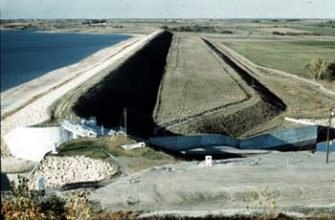
Perry was built the way most Kansas lakes were – to stop the Kansas River basin from flooding – when the Corps of Engineers dammed the Delaware River with a 7,750-foot earth embankment between 1964 and 1966. As the water rose it swallowed the old town of Ozawkie, which packed up and rebuilt on higher ground to the west; the Ozawkie you’ll drive through today is the second one. The lake filled into a long, branching reservoir with deep timbered coves and arms – Rock Creek, Slough Creek, Old Town – that give it far more fishable, hikeable edge than its acreage suggests.
Fishing Perry Lake
Perry has long been one of the better all-around fisheries in northeast Kansas, and it’s crappie that built its reputation – both white and black crappie pile into the brush, standing timber and creek arms, and spring crappie trips here are a Kansas tradition. It’s no slouch for bass either; Bassmaster has named Perry one of America’s 100 best bass lakes, and the timbered shoreline is made for largemouth. Round it out with white bass, walleye, sauger, and strong channel and flathead catfish, and you’ve got a lake worth a season of weekends.
- Crappie: fish the brush piles, standing timber and the Rock Creek and Slough Creek arms in spring; suspend over deeper structure in summer.
- Bass: work the timbered banks, points and flooded cover – Perry’s coves hold largemouth all season.
- White bass & walleye: watch for white-bass schools in open water, and target walleye and sauger on the points and the river channel.
- Catfish: the upper arms and flats produce channels and big flatheads, especially after dark.
Anglers 16 to 74 need a Kansas fishing license; check the latest KDWP fishing report and current limits before you head out.
Is Perry Lake safe to swim? Blue-green algae
Like other fertile Kansas reservoirs, Perry can develop blue-green algae (cyanobacteria) blooms in warm months, and KDHE manages it with zone-based Watch and Warning advisories – the Rock Creek arm and Old Town areas have been flagged in past summers. During a Warning, avoid swimming in the affected zone and keep children and dogs out of the water; boating and fishing are generally still fine. Check the current KDHE advisory and the posted signs before you swim, and steer clear of any visible scum.
Boating, the marina and sailing
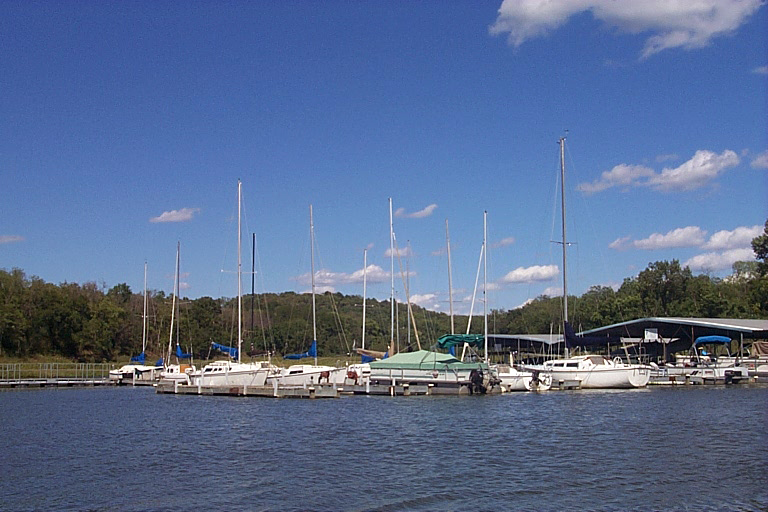
Perry is a popular boating and sailing lake, with steady wind, open water and timbered coves to explore. Rock Creek Marina & Resort on the east side is the main hub – boat slips, fuel, supplies and lake access – and there are public boat ramps spread around the Corps parks and the state park. As always on a flood-control reservoir, keep an eye on the water level, which moves with the seasons and the rain.
Camping at Perry Lake
Perry has one of the deepest sets of campgrounds of any Kansas lake – the Corps of Engineers alone runs roughly a thousand campsites around the shoreline, alongside Perry State Park. The standouts:
- Slough Creek – a big, family-friendly Corps campground with around 174 reservable sites, from walk-in tent spots to full water-and-electric hookups.
- Rock Creek – about 80 sites plus primitive loops, next to the marina and resort on the east shore.
- Old Town – a Corps public-use area with camping and lake access on a historic arm of the reservoir.
- Perry State Park cabins – eight cabins split between the Lakeview and Turkey Run areas for visitors who’d rather not tent it.
Reserve Corps sites on Recreation.gov and state-park sites and cabins through the Kansas State Parks system, remember the state-park vehicle permit, and book early for summer weekends.
The Perry Lake Trail, mountain biking & trails
This is what makes Perry special. The Perry Lake Trail is a roughly 29-mile backcountry hiking loop along the lake’s wooded west side – a nationally recognized National Recreation Trail that runs from easy, rolling sections in the south to genuinely rugged, hilly terrain in the north, with backpacking shelters along the way. It’s one of the longest and best foot trails in Kansas, and it draws hikers and backpackers who want more than a flat prairie stroll.
Alongside it, Perry is the mountain-biking capital of northeast Kansas: the purpose-built Perry Lake Bike Trail packs roughly 24 miles of technical singletrack into the hills, a favorite of serious riders out of Lawrence and Topeka. Add 25-plus miles of equestrian trails and the Longview disc golf course, and Perry quietly offers more land recreation than almost any reservoir in the state.
Eagles and wildlife
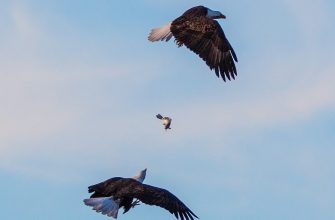
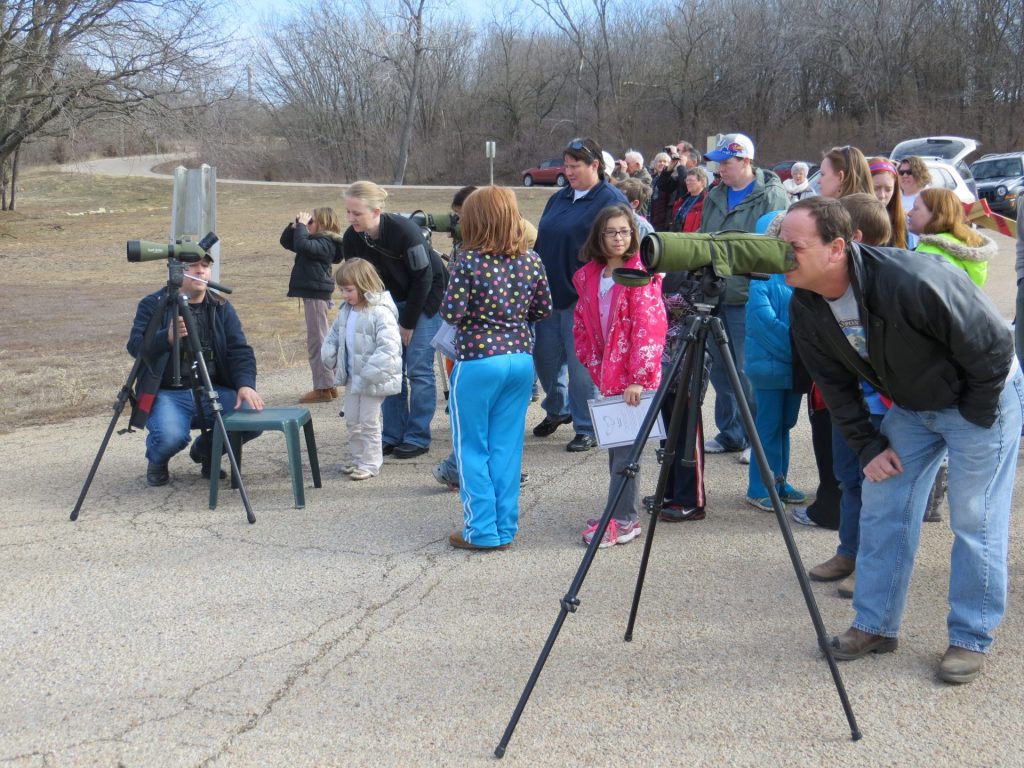
In winter, bald eagles gather below the Perry dam and along the open water, and the Corps hosts a Perry Lake Eagles Day each January with spotting scopes, live-bird programs and nature tours. The surrounding wildlife area and timber are good for birding, deer and turkey the rest of the year, and much of the Corps land opens to hunting in season – check KDWP regulations first.
Getting there and what’s nearby
Perry sits about 20 minutes northeast of Topeka and a similar drive north of Lawrence and the University of Kansas, which makes it one of the most accessible big lakes in the state – roughly 45 minutes from the Kansas City metro. Make a day or a weekend of it: Lawrence brings Massachusetts Street and KU, Topeka adds the Kansas state capitol and the Evel Knievel and Brown v. Board museums, and the small towns of Perry and Ozawkie sit right at the water’s edge.
Know before you go
- State park permit: a Kansas state-park vehicle permit is required for Perry State Park (daily or annual).
- Fishing license: anglers 16-74 need a Kansas fishing license.
- Algae: check the current KDHE blue-green algae advisory by zone before swimming, and keep pets away from scum.
- Water level: Perry is a flood-control reservoir and rises and falls – check current lake data before launching.
- Trails: the Perry Lake Trail’s north end is rugged – carry water and tell someone your plan if you’re backpacking it.
Frequently asked questions
How big is Perry Lake?
About 11,150 acres at normal pool with more than 160 miles of shoreline, in Jefferson County northeast of Topeka. It reaches around 43 feet deep.
What fish can you catch at Perry Lake?
Perry is best known for crappie and bass – it’s been named one of America’s 100 best bass lakes – along with white bass, walleye, sauger, and channel and flathead catfish.
How long is the Perry Lake Trail?
The Perry Lake Trail is a roughly 29-mile backcountry hiking loop and a recognized National Recreation Trail, ranging from easy in the south to rugged and hilly in the north, with shelters for backpackers.
Is there mountain biking at Perry Lake?
Yes – the purpose-built Perry Lake Bike Trail offers about 24 miles of technical singletrack, making Perry one of the best mountain-biking spots in northeast Kansas.
Can you camp at Perry Lake?
Yes. The Army Corps of Engineers runs about a thousand campsites around the lake, including Slough Creek (~174 sites), Rock Creek and Old Town, and Perry State Park adds eight cabins in the Lakeview and Turkey Run areas.
Is Perry Lake safe to swim in?
Usually, but check the current KDHE blue-green algae advisory first – the Rock Creek arm and Old Town have been flagged in past summers. Avoid visible scum and keep kids and dogs out of any zone under a Warning.
Where is Perry Lake?
In Jefferson County, northeast Kansas, near Ozawkie and Perry – about 20 minutes northeast of Topeka, north of Lawrence, and roughly 45 minutes west of Kansas City.
Is there a marina at Perry Lake?
Yes – Rock Creek Marina & Resort on the east shore offers slips, fuel, supplies and lake access, and there are public boat ramps around the Corps and state parks.
Related: explore more of the largest lakes in Kansas – including Milford Lake and Tuttle Creek Lake – or head back to the Kansas Lakes Database.