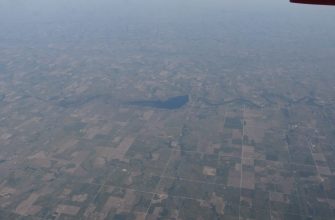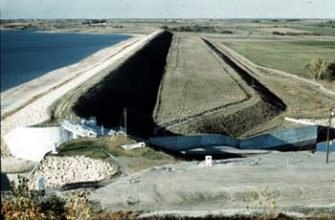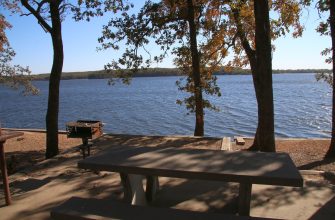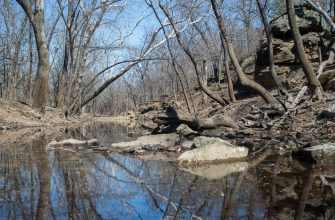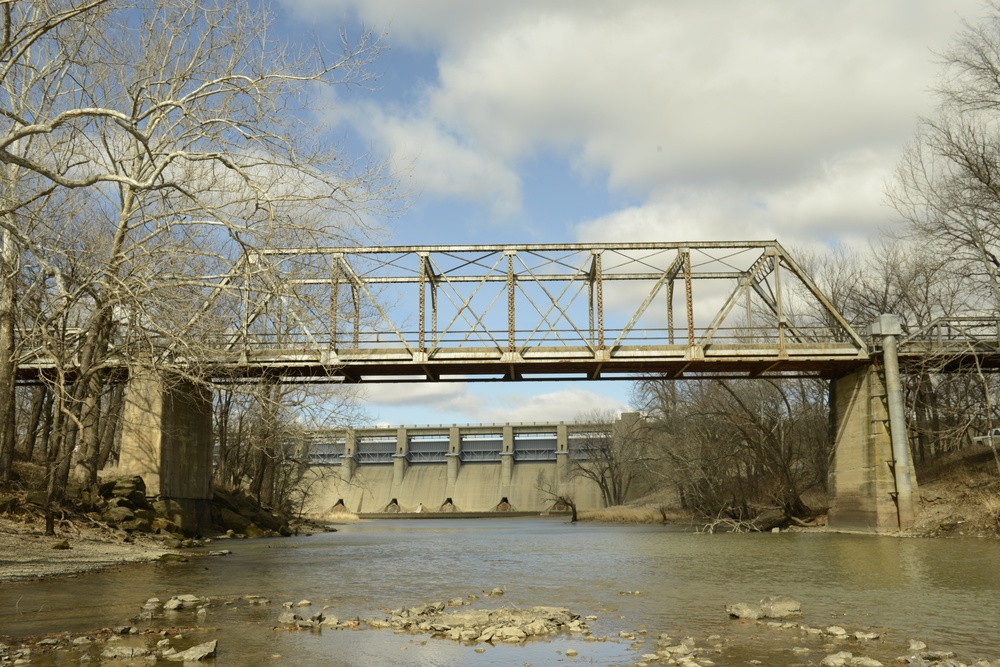
Fall River is small, old and quietly excellent. One of the first reservoirs the Corps of Engineers built in Kansas – the dam filled in 1949 – this 2,450-acre lake sits in the rolling hills of Greenwood County in southeast Kansas, ringed by the 1,900-acre Fall River State Park. It’s never crowded, it’s genuinely pretty, and it has a long-standing reputation for crappie, white bass and catfish. If you want a low-key fishing-and-camping weekend with good trails and a canoe-able river, this is the kind of lake Kansas does best.
This guide covers all of Fall River – the fishing, the Fredonia Bay and Quarry Bay areas of the state park, the trails and the river paddling, and the practical details. It’s part of our growing Kansas Lakes Database.
- Fall River Lake at a glance
- One of Kansas’ first lakes
- Fishing Fall River Lake
- Is Fall River Lake safe to swim? Blue-green algae
- Fall River State Park: Fredonia Bay and Quarry Bay
- Trails and paddling the Fall River
- Boating, the marina and getting there
- Know before you go
- Frequently asked questions
- How big is Fall River Lake?
- What fish can you catch at Fall River Lake?
- Can you camp at Fall River Lake?
- What is Quarry Bay at Fall River?
- Can you canoe at Fall River Lake?
- Where is Fall River Lake?
Fall River Lake at a glance
- Size: ~2,450 acres in Greenwood County, southeast Kansas
- Location: near the towns of Fall River and Eureka; northeast of Fredonia
- Built: dam on the Fall River (a tributary of the Verdigris), filled in 1949 by the U.S. Army Corps of Engineers – one of the oldest reservoirs in the state
- Top fish: crappie, white bass, channel catfish, walleye, bluegill
- State park: Fall River State Park (1,900 acres), in two areas – Fredonia Bay and Quarry Bay
- Known for: quiet, scenic crappie and white-bass fishing and six good hiking trails
One of Kansas’ first lakes
Fall River came early. The Corps of Engineers broke ground in 1946 and filled the reservoir in 1949, making it one of the very first federal lakes in Kansas – built, like the rest, to tame a flood-prone river, in this case the Fall River on its way to the Verdigris. Eight decades on it’s a settled, mature lake: timbered shorelines, established fish populations, and a state park grown up around it. It doesn’t have the size or the crowds of the big reservoirs to the north, and that’s exactly its appeal.
Fishing Fall River Lake
Fall River has long been a quietly productive fishery. Crappie is the calling card – the lake grows good, bragging-size slabs – and it’s matched by big schools of white bass, strong channel catfish, and a supporting cast of walleye, bluegill and green sunfish. Spring is when it all turns on, with crappie moving into the coves and the river arm.
- Crappie: fish brush piles, timber and the coves in spring; the state stocks brush piles you can find on the KDWP maps.
- White bass: chase the schools in open water and up the river arm, especially spring and summer.
- Catfish: the flats and upper river end produce good channels.
There’s also a kids’ fishing pond in the state park. Anglers 16 to 74 need a Kansas fishing license; check the latest KDWP fishing report and limits before you go.
Is Fall River Lake safe to swim? Blue-green algae
Fall River has a swim beach and is a pleasant summer lake, but like other fertile Kansas reservoirs it can develop blue-green algae (cyanobacteria) blooms in warm weather. KDHE posts Watch and Warning advisories; during a Watch, boating and fishing are fine but avoid swimming near visible scum, and during a Warning keep children and dogs out of the water. Check the current KDHE advisory before you swim.
Fall River State Park: Fredonia Bay and Quarry Bay
Fall River State Park spreads across about 1,900 acres in two separate areas, each with its own character:
- Fredonia Bay – the more developed side, with electric/water campsites, modern showers, a swim beach and boat access.
- Quarry Bay – named for an old rock quarry, a quieter area with rustic cabins, primitive camping and trailheads, where parts of the trail system are open to archery hunting in season.
All told the park has rustic cabins, more than 50 primitive sites and developed hookup sites, plus a kids’ pond. Reserve sites and cabins through the Kansas State Parks system and remember the state-park vehicle permit.
Trails and paddling the Fall River
The park is laced with six hiking trails – Casner Creek, Turkey Run, Post Oak, Overlook, Bluestem and Catclaw – that wander through timber, prairie and along the bluffs, good for an easy morning’s walk and some wildlife watching. And because the lake is fed by a real river, canoeing and kayaking the Fall River above the lake is a favorite here, a gentle float through quiet southeast-Kansas country.
Boating, the marina and getting there
Fall River has a marina, boat ramps and a convenience store, so it’s easy to launch and supply for a day on the water – boating, water-skiing and paddling are all popular. The lake sits near the small town of Fall River, just off U.S. 400, about 15 minutes east of Eureka and an easy drive from Wichita or the Tulsa area. It pairs naturally with its sister reservoir, Toronto Lake, a short drive northeast on the same Fall River system.
Know before you go
- State park permit: a Kansas state-park vehicle permit is required for Fall River State Park (daily or annual).
- Fishing license: anglers 16-74 need a Kansas fishing license.
- Two areas: the park is split into Fredonia Bay and Quarry Bay – check which one you’re headed to.
- Algae: check the current KDHE blue-green algae advisory before swimming, and avoid visible scum.
- Water level: as a flood-control reservoir Fall River rises and falls – check current conditions before launching.
Frequently asked questions
How big is Fall River Lake?
About 2,450 acres, in Greenwood County in southeast Kansas – one of the smaller and older federal reservoirs in the state, filled in 1949.
What fish can you catch at Fall River Lake?
Crappie is the headliner, along with big schools of white bass, strong channel catfish, and walleye and bluegill. Spring is the prime season.
Can you camp at Fall River Lake?
Yes – Fall River State Park has rustic cabins, more than 50 primitive sites and developed electric/water sites across its Fredonia Bay and Quarry Bay areas, plus a kids’ fishing pond.
What is Quarry Bay at Fall River?
Quarry Bay is one of the two areas of Fall River State Park, named for an old rock quarry – a quieter area with cabins, primitive camping and trails, parts of which are open to archery hunting in season.
Can you canoe at Fall River Lake?
Yes – paddling the Fall River above the lake is a popular gentle float, and the lake itself is good for canoes and kayaks.
Where is Fall River Lake?
In Greenwood County in southeast Kansas, near the town of Fall River off U.S. 400, about 15 minutes east of Eureka.
Related: explore more of the largest lakes in Kansas – including nearby Elk City Lake, plus John Redmond Reservoir and Council Grove Lake – or head back to the Kansas Lakes Database.