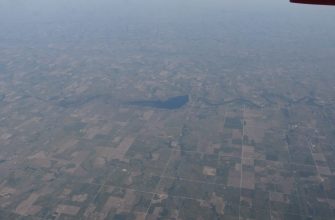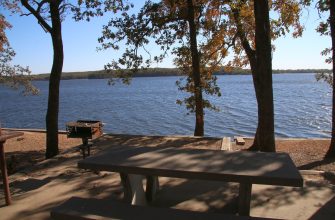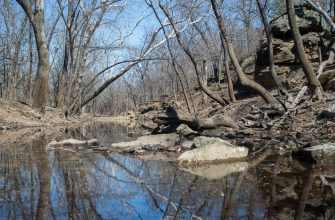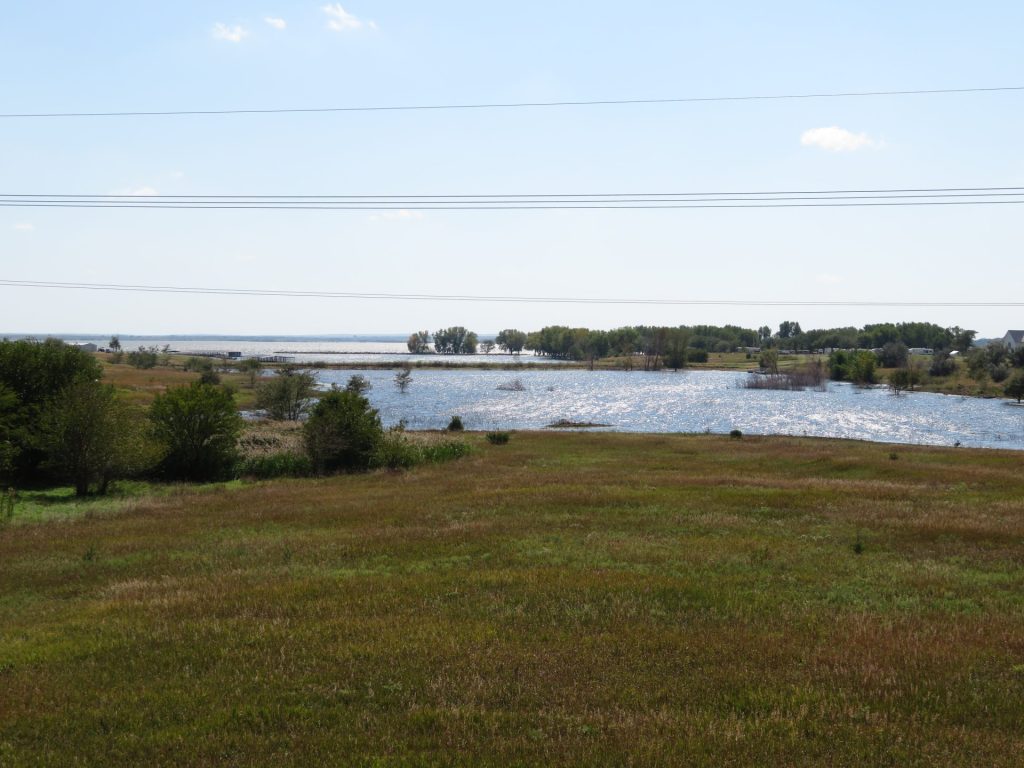
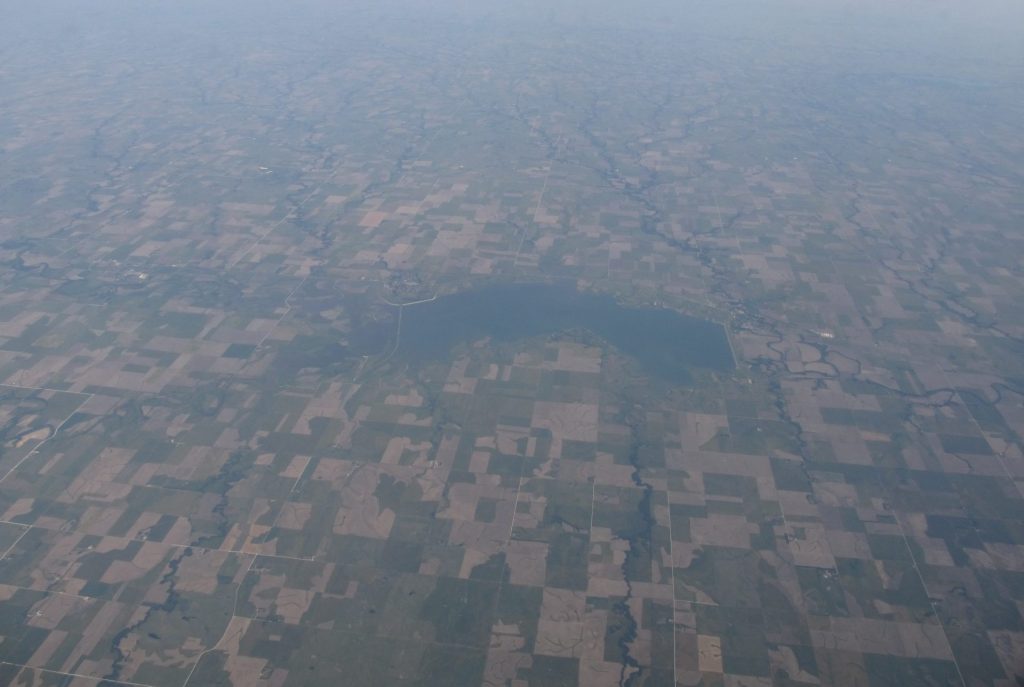
Waconda Lake is one of the biggest lakes in Kansas, and one of the most haunting. At roughly 12,600 acres with about 100 miles of shoreline on the Solomon River in north-central Kansas, this is big, open, walleye water that draws anglers from across the region. But it carries a story most lakes don’t: it was built over Waconda Spring, the “Great Spirit Spring,” a sacred artesian well that was a ceremonial gathering place for Plains tribes for centuries before the reservoir sealed it away in 1968. Today, around the lake the state keeps that history alive while the fishing, hunting and camping make it one of the best all-around destinations in the region – and the World’s Largest Ball of Twine is just up the road.
This guide covers all of Waconda – the fishing, Glen Elder State Park, the big wildlife area and hunting, and the remarkable history of the spring beneath the water. It’s part of our growing Kansas Lakes Database.
- Waconda Lake at a glance
- The lake over the Great Spirit Spring
- Fishing Waconda Lake
- Is Waconda Lake safe to swim? Blue-green algae
- Boating, the marina and camping
- Hunting and the wildlife area
- Getting there and what’s nearby
- Know before you go
- Frequently asked questions
- How big is Waconda Lake?
- What is Waconda Lake also called?
- What was Waconda Spring?
- What fish can you catch at Waconda Lake?
- Can you camp at Waconda Lake?
- Can you hunt at Waconda Lake?
- Where is Waconda Lake?
Waconda Lake at a glance
- Size: ~12,600 acres at full pool with about 100 miles of shoreline – one of the largest lakes in Kansas
- Maximum depth: about 55 feet; normal pool elevation around 1,456 feet
- Location: Mitchell and Osborne counties; between Glen Elder and Cawker City, near Beloit
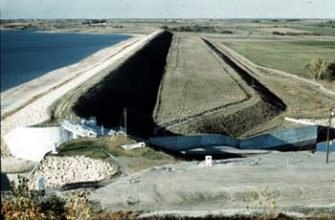
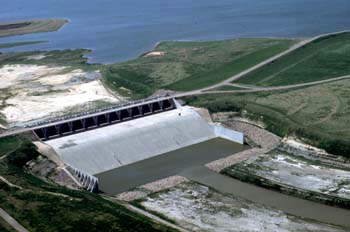
- Built: Glen Elder Dam on the Solomon River, completed in 1969 by the U.S. Bureau of Reclamation
- Top fish: walleye, white bass, wiper/striped bass, saugeye, crappie, channel and flathead catfish, largemouth bass
- Known for: big-water walleye fishing, abundant hunting, and the history of Waconda Spring
The lake over the Great Spirit Spring
Long before the dam, this valley held Waconda Spring – a natural artesian well that bubbled up inside a mineral cone rising above the prairie. To the Pawnee, Kaw, Kiowa, Cheyenne, Arapaho and many other Plains tribes it was sacred ground, a place of healing and ceremony; “Waconda” is often translated as “Great Spirit.” Settlers later built a health spa and sanitarium around the spring’s mineral waters. When the Bureau of Reclamation dammed the Solomon River and filled the reservoir in 1968-69, efforts to save the spring as a national monument failed, and it was sealed beneath the rising lake.
The state hasn’t let the story disappear. At Glen Elder State Park you’ll find a Waconda Springs Replica, the Waconda Heritage Village (a living-history museum built around the relocated Hopewell Church), and the Waconda Visitor & Education Center, which tells the story of the spring, the Solomon River valley and the dam. There’s also an annual Waconda Indian Festival. It’s a rare lake where the history is as compelling as the fishing.
Fishing Waconda Lake
Waconda is one of the better big-water fisheries in north-central Kansas, and walleye is the marquee fish – so good that fishing guides and lodges work the lake. It’s also strong for white bass and wiper, with saugeye, crappie, largemouth bass and big channel and flathead catfish in the mix. With 100 miles of shoreline and two big river arms, there’s a lot of water to learn, and the fishing runs year-round.
- Walleye & saugeye: fish the points, the dam, the old river channel and the rocky breaks at low light.
- White bass & wiper: chase surface-feeding schools in open water on summer mornings and evenings.
- Crappie: work brush and timber in the coves and arms, best in spring.
- Catfish: the flats and the upper river arms produce channels and big flatheads.
Anglers 16 to 74 need a Kansas fishing license; check the latest KDWP fishing report and limits before you go.
Is Waconda Lake safe to swim? Blue-green algae
Waconda has swim beaches and is a popular summer lake, but like other fertile Kansas reservoirs it can develop blue-green algae (cyanobacteria) blooms in warm weather. KDHE posts Watch and Warning advisories; during a Watch, boating and fishing are fine but avoid swimming near visible scum, and during a Warning keep children and dogs out of the water. Check the current KDHE advisory before you swim.
Boating, the marina and camping
Glen Elder State Park, on the north shore, is the base for it all. The full-service Glen Elder Marina sells fuel, bait and supplies and rents boats and slips, and the park’s three campgrounds offer something for everyone: 121 electric hookups (most with water), more than 50 premium reservable sites with concrete pads, and over 300 primitive sites – plus swim beaches, a visitor center and courts for volleyball and softball. With a big, open lake behind it, Waconda is good for boating, water-skiing and paddling as well as fishing. Reserve sites through the Kansas State Parks system and remember the state-park vehicle permit.
Hunting and the wildlife area
Waconda is as much a hunting destination as a fishing one. The surrounding Glen Elder Wildlife Area covers more than 13,000 acres, and over 12,000 acres are open to public hunting for deer, waterfowl and upland game – one of the larger public-hunting blocks in the region. Special hunts are available by application for youth, hunters with disabilities and family groups. Check KDWP regulations and area maps before the season.
Getting there and what’s nearby
Waconda sits in north-central Kansas on U.S. 24, near Beloit and between the small towns of Glen Elder and Cawker City. Cawker City, just five miles west, is home to the famous World’s Largest Ball of Twine – a quintessential Kansas roadside stop that pairs perfectly with a lake weekend. The rolling Solomon River valley around the lake is quiet, scenic country well off the interstate.
Know before you go
- State park permit: a Kansas state-park vehicle permit is required for Glen Elder State Park (daily or annual).
- Fishing license: anglers 16-74 need a Kansas fishing license.
- Algae: check the current KDHE blue-green algae advisory before swimming, and avoid visible scum.
- Hunting: 12,000+ acres are open to public hunting – check KDWP regulations, seasons and special-hunt applications.
- Water level: as a flood-control reservoir Waconda rises and falls – check current conditions before launching.
Frequently asked questions
How big is Waconda Lake?
About 12,600 acres at full pool with roughly 100 miles of shoreline, making it one of the largest lakes in Kansas. It’s also known as Glen Elder Reservoir.
What is Waconda Lake also called?
Waconda Lake is also known as Glen Elder Reservoir, after the dam and the nearby town of Glen Elder. The state park on its shore is Glen Elder State Park.
What was Waconda Spring?
A sacred artesian “Great Spirit” Spring that was a ceremonial site for many Plains tribes and later a health spa. It was sealed beneath the reservoir when the lake filled in 1968; a replica and heritage village at the park preserve its story.
What fish can you catch at Waconda Lake?
Walleye is the headliner, along with white bass, wiper/striped bass, saugeye, crappie, largemouth bass, and channel and flathead catfish. Fishing is year-round.
Can you camp at Waconda Lake?
Yes. Glen Elder State Park has three campgrounds with 121 electric hookups, 50-plus premium concrete-pad sites and over 300 primitive sites, plus a full-service marina and swim beaches.
Can you hunt at Waconda Lake?
Yes – the Glen Elder Wildlife Area has more than 12,000 acres open to public hunting for deer, waterfowl and upland game, with special hunts available by application.
Where is Waconda Lake?
In north-central Kansas in Mitchell and Osborne counties, on U.S. 24 between Glen Elder and Cawker City, near Beloit.
Related: explore more of the largest lakes in Kansas – including Wilson Lake, Cedar Bluff Reservoir and Kanopolis Lake – or head back to the Kansas Lakes Database.