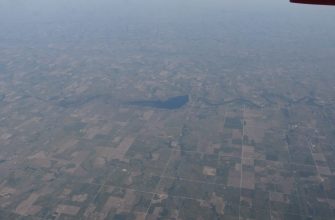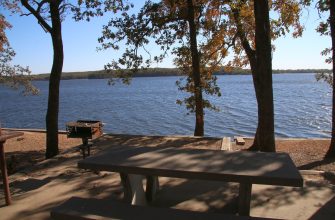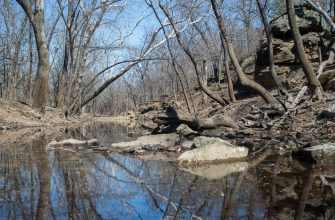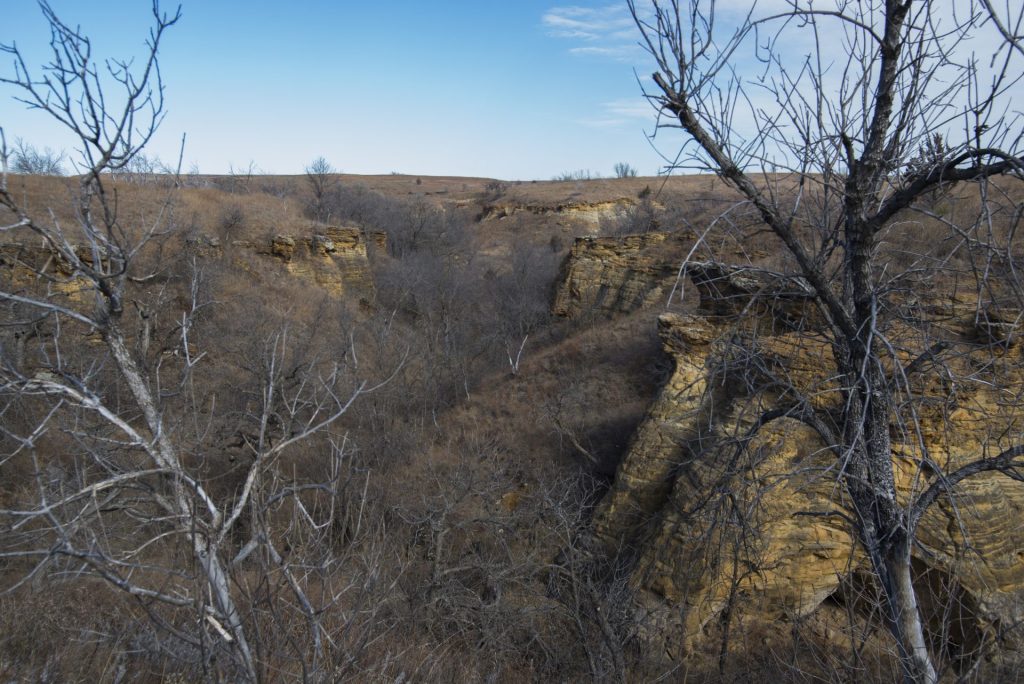
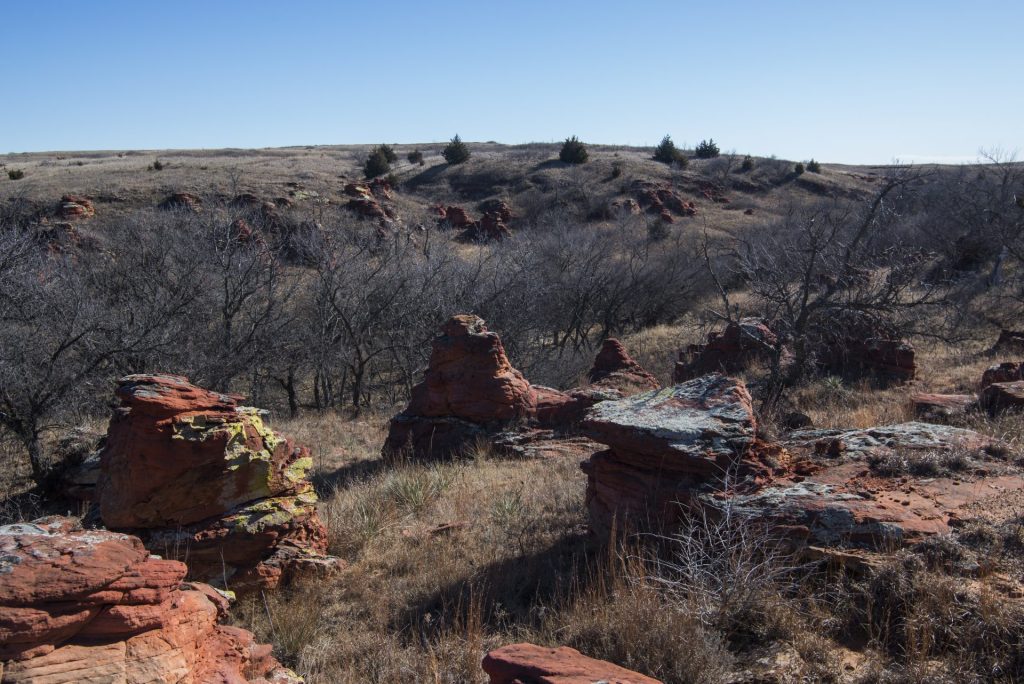
Kanopolis was Kansas’ first lake, and it’s still one of its most surprising. Tucked into the Smoky Hills southwest of Salina, this is the lake people drive to when they want red sandstone canyons, not just open water – a place where 30-plus miles of trails wind through bluffs and box canyons with names like Horsethief and Red Rock, and where the rock formations look more like Utah than the Great Plains. At about 3,400 acres it’s a mid-sized reservoir, but as a scenery-and-trails destination it’s in a class of its own in Kansas.
This guide covers all of Kanopolis – the history of the state’s oldest reservoir and first state park, the fishing, the canyon trails, the camping, and the geological oddities next door at Mushroom Rock and Faris Caves. It’s part of our growing Kansas Lakes Database.
- Kanopolis Lake at a glance
- Kansas’ first lake and first state park
- Fishing Kanopolis Lake
- Is Kanopolis Lake safe to swim? Blue-green algae
- Horsethief Canyon, Red Rock and 30 miles of trails
- Mushroom Rock and Faris Caves
- Boating, the marina and beaches
- Camping at Kanopolis Lake
- Getting there and what’s nearby
- Know before you go
- Frequently asked questions
- Is Kanopolis the oldest lake in Kansas?
- What is there to do at Kanopolis Lake?
- What are the trails at Kanopolis like?
- What fish can you catch at Kanopolis Lake?
- What is Mushroom Rock State Park?
- Can you camp at Kanopolis Lake?
- Where is Kanopolis Lake?
Kanopolis Lake at a glance
- Size: ~3,400 acres in the Smoky Hills of central Kansas
- Location: Ellsworth County; about 30 miles southwest of Salina, near Marquette and Ellsworth
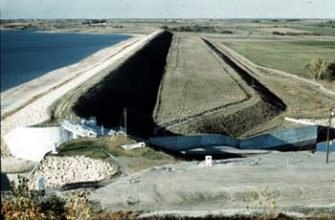
- Built: dam on the Smoky Hill River, completed in 1948 by the U.S. Army Corps of Engineers – the first federal reservoir in Kansas
- State park: Kanopolis State Park – the first state park in Kansas
- Top fish: saugeye, wiper, walleye, white bass, crappie, channel catfish, largemouth bass
- Famous for: Smoky Hills sandstone canyons and 30+ miles of hiking, biking and horse trails
Kansas’ first lake and first state park
Kanopolis holds a couple of firsts. When the Corps of Engineers finished the dam on the Smoky Hill River in 1948, it became the first federal reservoir in Kansas – the one that started the whole era of big Kansas lakes – and the state built its first state park around it. Eight decades on, the lake is showing its age a bit (like a lot of old reservoirs, it’s slowly filling with silt), but the setting only gets better with time: the Dakota sandstone bluffs that ring the water have been weathering into canyons and hoodoos for millions of years, and they’re the real reason to come.
Fishing Kanopolis Lake
Kanopolis is a solid prairie-reservoir fishery, and saugeye and wiper lead the way – both thrive in its stained, fertile water. You’ll also find walleye, white bass, crappie, channel catfish and largemouth bass, plus good fishing in the Smoky Hill River above and below the lake.
- Saugeye & walleye: work the points, the dam and the river channel, best at low light.
- Wiper & white bass: chase surface-feeding schools in open water on summer mornings and evenings.
- Crappie & catfish: find crappie on brush and rock, and channel cats on the flats and up the river arm.
Anglers 16 to 74 need a Kansas fishing license; check the latest KDWP fishing report and limits before you go.
Is Kanopolis Lake safe to swim? Blue-green algae
Kanopolis has swim beaches and is a popular summer lake, but like other shallow, fertile Kansas reservoirs it can develop blue-green algae (cyanobacteria) blooms – in fact it’s one of the lakes researchers study for them. KDHE posts Watch and Warning advisories; during a Watch, boating and fishing are fine but avoid swimming near visible scum, and during a Warning keep children and dogs out of the water. Check the current KDHE advisory before you swim.
Horsethief Canyon, Red Rock and 30 miles of trails
This is the heart of Kanopolis. The park has more than 30 miles of trails open to hikers, mountain bikers and horseback riders, threading through sandstone canyons, prairie and lakeshore. The marquee routes are the Horsethief Canyon Trails (about 5.5 miles, named for the outlaws who supposedly stashed stolen horses in the box canyon) and the Rockin’ K Trails (about 4 miles), with the short Buffalo Track Canyon Nature Trail for an easy out-and-back. It’s some of the best canyon hiking and trail riding in the state, and the equestrian crowd has made Kanopolis a favorite for exactly that reason.
Mushroom Rock and Faris Caves
Two natural curiosities make Kanopolis worth a longer trip. Just up the road, tiny Mushroom Rock State Park – the smallest state park in Kansas – protects a handful of bizarre, mushroom-shaped Dakota sandstone concretions, some big enough to stand under, that have become one of central Kansas’ most photographed oddities. And along the Smoky Hill River, the Faris Caves are sandstone chambers carved by early settlers that once served as a milk house, a schoolroom and even living quarters. Together they turn a lake weekend into a genuine geology-and-history road trip.
Boating, the marina and beaches
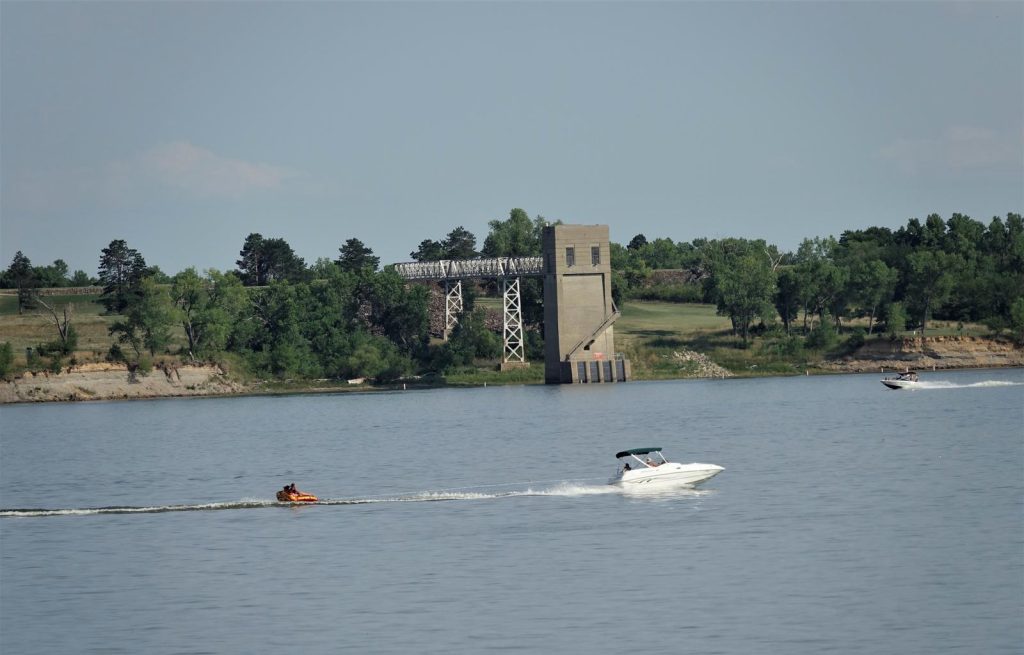
Kanopolis has a full-service marina, three boat ramps and swim beaches, with room for power boats, canoes, kayaks and jet skis. It’s a friendly, uncrowded lake for a day on the water – just mind the wind and the changing water level, as on any prairie reservoir.
Camping at Kanopolis Lake
Kanopolis State Park spreads its sites across the Langley Point and Horsethief areas, with 14 campgrounds, more than 200 primitive sites and 119 utility (electric/water) sites, plus cabins, beaches, picnic areas and a dedicated horse camp for trail riders. Reserve sites and cabins through the Kansas State Parks system, remember the state-park vehicle permit, and book early for summer and fall weekends when the canyons are at their best.
Getting there and what’s nearby
Kanopolis sits about 30 minutes southwest of Salina off K-141, an easy detour from I-70 or I-135. Nearby, Lindsborg – “Little Sweden, U.S.A.” – is a charming arts town with Swedish heritage and the Birger Sandzen gallery, and historic Ellsworth carries real Old West cattle-town history. Pair the lake with Mushroom Rock and one of those towns and you’ve got a perfect central-Kansas weekend.
Know before you go
- State park permit: a Kansas state-park vehicle permit is required for Kanopolis State Park (daily or annual).
- Fishing license: anglers 16-74 need a Kansas fishing license.
- Trails: the canyon trails can be muddy and slick after rain – check conditions, especially if you’re biking or riding.
- Algae: check the current KDHE blue-green algae advisory before swimming, and avoid visible scum.
- Water level: as a flood-control reservoir Kanopolis rises and falls – check current conditions before launching.
Frequently asked questions
Is Kanopolis the oldest lake in Kansas?
Yes – Kanopolis Lake, completed in 1948 on the Smoky Hill River, was the first federal reservoir built in Kansas, and Kanopolis State Park was the state’s first state park.
What is there to do at Kanopolis Lake?
Hiking, mountain biking and horseback riding on 30+ miles of canyon trails, fishing for saugeye and wiper, boating and swimming, plus nearby Mushroom Rock State Park and the Faris Caves.
What are the trails at Kanopolis like?
More than 30 miles of trails wind through Smoky Hills sandstone canyons, including the Horsethief Canyon Trails (about 5.5 miles) and the Rockin’ K Trails (about 4 miles), open to hikers, mountain bikers and horseback riders.
What fish can you catch at Kanopolis Lake?
Saugeye and wiper are the headliners, along with walleye, white bass, crappie, channel catfish and largemouth bass, plus river fishing above and below the lake.
What is Mushroom Rock State Park?
The smallest state park in Kansas, just up the road from Kanopolis, protecting bizarre mushroom-shaped Dakota sandstone formations – a favorite photo stop.
Can you camp at Kanopolis Lake?
Yes. Kanopolis State Park has more than 200 primitive and 119 utility campsites across the Langley Point and Horsethief areas, plus cabins and a dedicated horse camp.
Where is Kanopolis Lake?
In Ellsworth County in the Smoky Hills of central Kansas, about 30 miles southwest of Salina near Marquette and Ellsworth.
Related: explore more of the largest lakes in Kansas – including nearby Wilson Lake, plus Cheney Lake and Milford Lake – or head back to the Kansas Lakes Database.