The Mined Land Wildlife Area is one of the most unusual fishing destinations in Kansas – and one of the most rewarding. Spread across 14,500 acres of reclaimed coal country in the far southeast corner of the state, it holds more than 1,000 strip-pit lakes: deep, clear, tree-ringed waters left behind by decades of surface mining and now teeming with fish. With over 200 pits stocked, a famous year-round Trout Pit, and free primitive camping throughout, “the strip pits” are a genuine Kansas original – named one of the 8 Wonders of Kansas Geography.
This guide covers the Mined Land Wildlife Area – the strip-pit fishing, the Trout Pit, the camping and access. It’s part of our growing Kansas Lakes Database.
- Mined Land Wildlife Area at a glance
- A thousand lakes from a coal-mining past
- Strip-pit fishing
- Camping, access and other uses
- Getting there and what’s nearby
- Frequently asked questions
- How many lakes are in the Mined Land Wildlife Area?
- Is there really trout fishing in southeast Kansas?
- What fish can you catch in the strip pits?
- Can you camp at the Mined Land Wildlife Area?
- Where is the Mined Land Wildlife Area?
Mined Land Wildlife Area at a glance
- Size: about 14,500 acres – roughly 1,500 acres of water and 13,000 acres of land – across Cherokee, Crawford and Labette counties in southeast Kansas
- The pits: more than 1,000 former strip-mine lakes ranging from about half an acre to 50 acres, some over 60 feet deep
- Managed by: Kansas Department of Wildlife and Parks (KDWP)
- Top fish: largemouth and spotted bass, channel and flathead catfish, crappie, bluegill and redear sunfish – plus rainbow trout in the Trout Pit (Unit 30)
- Camping: free, primarily primitive camping (7-night limit; no electric or water hookups)
- Also: hunting, hiking, wildlife viewing and mushroom and berry picking; designated an 8 Wonders of Kansas Geography site
A thousand lakes from a coal-mining past
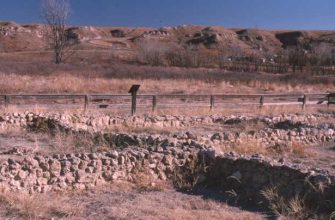
From the 1870s into the 1970s, this corner of Kansas was stripped for coal, leaving long rows of spoil ridges and water-filled pits. Rather than let it go to waste, the land was reclaimed for wildlife: the largest piece, 8,208 acres, was donated by the Pittsburg & Midway Coal Company to KDWP in 1981. Today the spoil banks are wooded, the pits are clear and deep, and the whole mosaic – water, timber and grassland – is managed as public ground. The result is a landscape found nowhere else in the state: hundreds of secluded lakes you can have almost to yourself.
Strip-pit fishing
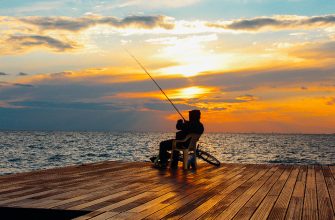
The fishing is the main event. More than 200 pits are stocked, and the clear, deep water grows quality fish: largemouth and spotted bass, channel and flathead catfish, crappie, bluegill and redear sunfish. Because the pits are small and well-defined, they’re a paradise for bank anglers, kayakers and anyone who likes to explore – each pit fishes a little differently. The standout is the Trout Pit on Unit 30, deep enough to hold cool water and stocked to offer rare year-round rainbow trout fishing in Kansas (a Kansas trout permit is required there). Anglers 16 to 74 need a Kansas fishing license; check the current KDWP regulations and unit maps before you go.
Camping, access and other uses
Camping is free and mostly primitive, with a seven-night limit and no developed hookups – it’s a back-to-basics, find-your-own-pit kind of place. Beyond fishing, the area is excellent for hunting (deer, turkey, quail and waterfowl), hiking, wildlife watching, and seasonal mushroom and berry picking. The units are numbered and spread across three counties, so grab a KDWP map and pick an area. As with any warm Kansas water, watch for summer blue-green algae advisories and avoid visible scum.
Getting there and what’s nearby
The wildlife area lies around Pittsburg and Columbus in the far southeast corner of Kansas. It pairs naturally with nearby Crawford State Park just to the north, and the bigger reservoirs Big Hill Lake and the timbered Bourbon State Fishing Lake are within day-trip range to the west.
Frequently asked questions
How many lakes are in the Mined Land Wildlife Area?
More than 1,000 former strip-mine pits, ranging from about half an acre to 50 acres, with over 200 of them stocked for fishing.
Is there really trout fishing in southeast Kansas?
Yes – the Trout Pit on Unit 30 is deep enough to hold cool water and is stocked for rare year-round rainbow trout fishing. A Kansas trout permit is required there.
What fish can you catch in the strip pits?
Largemouth and spotted bass, channel and flathead catfish, crappie, bluegill and redear sunfish – plus trout in the Trout Pit.
Can you camp at the Mined Land Wildlife Area?
Yes – free, mostly primitive camping is allowed with a seven-night limit, but there are no electric or water hookups.
Where is the Mined Land Wildlife Area?
In Cherokee, Crawford and Labette counties in the far southeast corner of Kansas, around Pittsburg and Columbus.
Related: explore more small lakes of Kansas, or nearby waters like Crawford State Park and Big Hill Lake – or head back to the Kansas Lakes Database.